
Tariffs Don’t Work — Here’s What Actually Does

So once again, the historical record is clear: tariffs hurt economies.
They slow global growth, increase inflation, drive up prices, and actually reduce jobs.
As I mentioned, 150,000 jobs were lost in 2018 and 2019 following Trump’s tariffs. Some of those tariffs had to be rolled back because the impact was so severe. Even after adjustments, there was a net loss of about 75,000 jobs in the steel industry alone. Trump had imposed a 25% tariff on steel and a 10% tariff on aluminum — and it did not go well.
Tariffs are not the way forward, friends. So here’s what we should do instead of relying on these harmful economic policies that hurt everyone.
1. Work Toward Reducing Trade Barriers
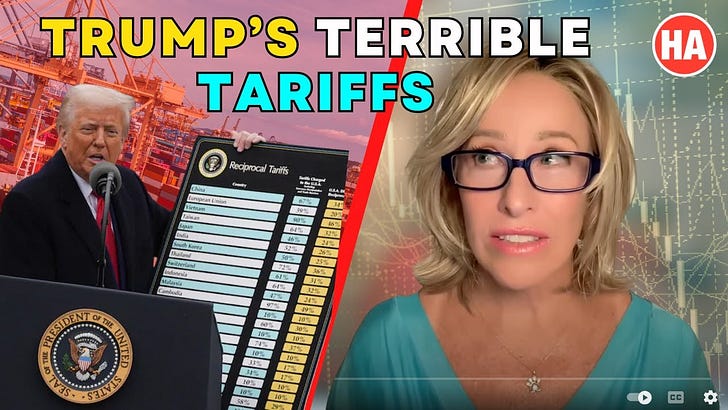
All the countries Trump referenced in his chart (which, by the way, was illogical, irrational, and presented in a haphazard manner — not alphabetically, not by region, not even by tariff levels) already have trade agreements with the U.S.
These agreements are intricate and specific. For instance, a blouse and a pair of pants from the same country can carry different tariffs. Sugar imports vary based on quotas, type, and level of refinement. Tariffs are complicated — and slapping on a flat 10% across the board just doesn’t make sense.
These agreements were negotiated over months, sometimes years, by skilled diplomats and trade experts. So it’s deeply troubling to me that Trump would violate these existing agreements. If he wanted to renegotiate them, that’s one thing — you send in your team and work through proper diplomatic channels. But this bloated showmanship? It feels juvenile and undignified — not presidential.
2. Reduce Personal Income Taxes
Reducing income taxes across the board gives individuals more money in their pockets. Think about it: if you're in a tax bracket where nearly 50% of your income goes to federal and state taxes, that’s crushing. As a small business owner myself, I pay personal income tax, federal tax, and corporate tax. I'm taxed three times on the same income!
When people have more disposable income, they spend more — which stimulates economic growth and creates jobs.
3. Reduce Corporate Taxes
Corporate taxes need to be reduced so companies can reinvest in themselves. When businesses have more resources, they can:
Hire more people
Engage in research and development
Innovate better, more competitive products
Increase productivity
Pay better wages
4. Reduce Government Regulations
Overregulation is strangling American manufacturing. Entire departments exist just to stay compliant with government paperwork — it’s expensive and burdensome.
I’ll soon release a video doing a deep dive into carbon capture mandates and carbon tariffs, and how the EPA and other agencies make it almost impossible for companies to thrive. The cost and complexity of compliance is what often pushes businesses to operate overseas.
5. 100% Bonus Depreciation
This is an accounting mechanism that allowed businesses to write off 100% of asset depreciation in the first year, instead of spreading it over decades. It encouraged reinvestment, helped reduce unemployment, and raised wages. But this policy is about to sunset unless Congress acts.
Local and state governments can also offer tax breaks or incentives to attract manufacturers. I’m all for that — as long as it doesn’t involve destructive tariffs.
We can also consider reductions in payroll taxes, among other measures.
The real path to prosperity is not tariffs. It's:
Reducing trade barriers
Lowering personal income taxes
Lowering corporate taxes
Cutting excessive regulations
Extending smart business incentives like bonus depreciation
These proven strategies stimulate real economic growth, increase productivity, and raise the standard of living — for more people, in more places, than tariffs ever could.
So why abandon tried-and-true economic strategies for the bizarre and harmful tariffs? History clearly shows they do more harm than good.

Read Next:


Peggy, something that worked well in CA to bring back runaway filming from other areas were tax incentives. It hurt no CA business, yes other areas but the tax incentive battle is an ongoing back and forth. When the first well put together tax incentive package was assembled about 8-10 yrs ago it was a huge boost to CA economy. It not only boosted film crew employment but “trickled down” to film rental houses (increases sales tax, yes CA sales tax on rentals). It increased sales for food, via craft services, catering and road crews like set dressers eating at restaurants while doing pickups and returns. It also boosted purchases for items used for set construction, set dressing, props and wardrobe. Once the tax incentive bills have been passed in Hacramento work increased within weeks, boosted the local economy, not destructive to the economy.
It seems like tax incentives were not even a bit of a thought in this disaster. Also find it odd that if it was anything about unfair to the USA tariffs why is any US money being issued in form of Us monetary aid to a country that charges US tariffs?
This situation almost seems like a continuation of destroying small businesses that survived the first trump small business destruction during 2020.
Honestly, Peggy, why dont you join Trumps “Truth Social” and share this information with him? He could certainly use some Good Advice and I heard he reads whats posted there…I know its like stroking him…but he has been unjustly treated by the Democrats too and barring another sniper or an aspartame induced stroke we are stuck with him for 3 more LONNNNG Years!