
Blinded by the (Head)Lights??
Reminds me of that song from the 70's....

Friends, one of the topics you’ve been asking me to cover is the issue of these blinding headlights.
You know exactly what I’m talking about. You’re driving down a one-lane road at night, minding your own business, when a car approaches and—bam!—you’re temporarily blinded. No, it’s not their high beams. It’s just their regular, everyday, headlights. And it’s not just me. People are waking up to this issue across the country because we’re all getting exposed to these overly bright LED lights whether we’re light-sensitive or not.
I don’t know about you, but I am very light-sensitive. Years ago, I had a spontaneous retinal detachment. I was completely blind in one eye for several days, and it took months to recover. Thank God, my vision came back—but it’s not 100%. So yes, I take my eyesight seriously. And these newer LED headlights are not just annoying; they’re dangerous.
In this substack (and in my video above), we're going to talk about why these headlights are so bright and why people are getting upset about it. Let me know if you have ever had a discussion with people about this and what you would like to see happen. Do you believe legislation is the right way to address it?
The reason this issue needs to be addressed is because we can’t just “opt out” of this one.
When it comes to certain things—like cooties injections or masks—I’ve always empowered people to say no. To take a stand. You can keep your distance from those things. You can protect yourself, your family, and even your pets by opting out.
But you can’t opt out of being hit with blinding headlights unless you stop driving at night altogether. And for many people, that’s just not realistic.
So in that sense, this is in the same bucket as the spraying in the skies. You didn’t ask for it, you didn’t consent to it, and you can’t avoid it.
Sometimes I literally drive with sunglasses on at night. I know, it sounds ridiculous, but it’s actually safer than facing the oncoming glare head-on. I’ve even found myself shielding my eyes with my hand while driving because it’s that blinding.
And it’s not just the oncoming cars. How about the ones behind you? You think they have their brights on, but it’s just their default setting. That intense light bounces right into your rearview mirror, forcing you to squint and look away. It’s distracting, disorienting, and dangerous.
So what’s going on?
Was the push for ultra-bright LED headlights intentional?
Was it designed to discourage people from driving at night? Not only are they blinding, but these LED lights have implications on your circadian rhythm, sleep, and nervous system.
These ultra-bright headlights are largely due to the shift from the old, soft-glow halogen bulbs to harsh, cold LED lights. They don’t cast a natural glow; they shoot light straight out like lasers. They’re disorienting, distracting, and they reduce visibility because they can cause photo bleaching—a form of temporary blindness that makes it hard for your eyes to adjust to the dark. So instead of focusing on the road, your eyes are reacting to the glare. That reduces visibility, delays your reaction time, and increases the risk of accidents.
I can’t believe this has gone on as long as it has.
And it’s not just the headlights. The LED streetlights are just as bad—no warm glow, no peripheral illumination. Just cold, piercing brightness that messes with your vision and your nervous system. In Florida, there’s one stretch of road still using the old orange-tinted lights. What a difference.
I spoke about this topic last year and at the time, Rhode Island (of all places) actually brought this to the forefront of conversation.
I shared last year about how I received an email from Congressman Seth Magaziner from Rhode Island. No, I don’t live there, and no, I don’t know how he got my email, but I am so glad I got this news. What caught my attention was that he actually asked constituents for input on whether these headlights are too bright—and he’s considering legislation to regulate their intensity.
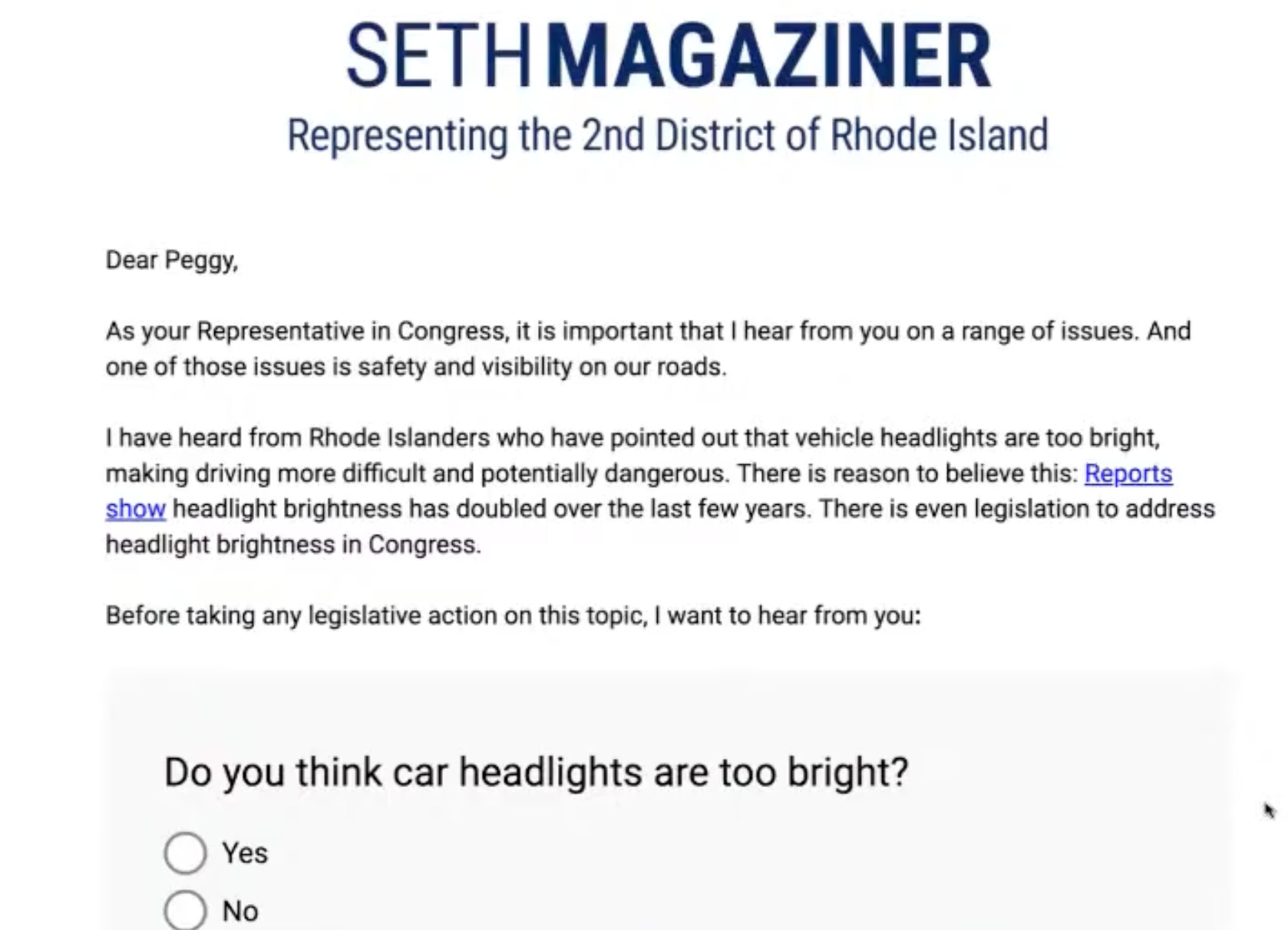
He goes on to say that headlight brightness has DOUBLED over the last few years.1 Why?!
Friends, I’m not necessarily in favor of more laws. I’m in favor of upholding the laws already on the book, including our Constitution. But there maybe some cases where legislation could have a more powerful impact.
And if Rhode Island is starting the conversation, let’s amplify it. Reach out to your representatives and start the conversation.
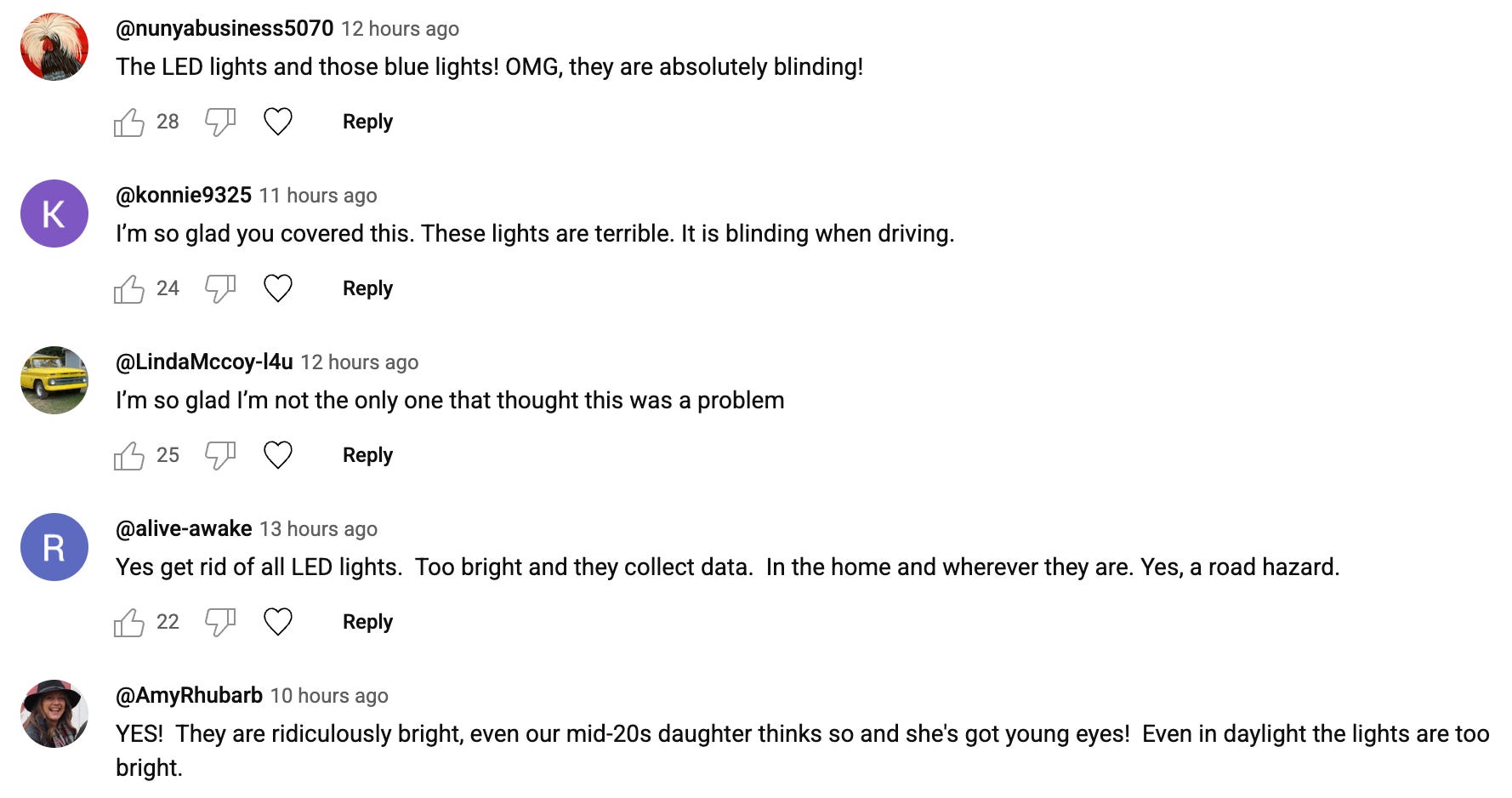
Let me know what you’re seeing where you live. Are the lights getting worse? Do you feel safe driving at night? I’d love to hear from you in a comment below.
Thank you for this Peggy. I recently interviewed Mark Baker, who is suing the FDA over the safety, or lack thereof, of these lights. Have you heard of Mark?
In Europe they addressed this issue (somewhat) years ago by mandating that headlight placement for ALL new vehicles not exceed a certain height. Which is why all of the large vehicles such as buses and semi-tractors look sort of funny with their low placed headlights. In the US however this is a big problem with people installing lift kits and big tires on their vehicles effectively elevating their headlights to where they point directly into the cockpit/cabin of most passenger type/sedan style vehicles.
The other problem is people always using their 'fog lights' even when not foggy. In some states this is punishable with a fine, Oregon for example it's $350 having your foglights on during normal driving conditions though I've never seen them enforce it. Thank you.