
Where are Your Charitable Donations REALLY Going??

Friends, in my latest video, I’m diving into something that can truly improve your life: making giving decisions that actually align with your values. Many of the large non-profits tend to sweep people up in emotional appeals or shiny TV commercials, but before you open your wallet, I want to make sure you know who you’re supporting and where that money ends up.
Click on the image below to watch. Content starts about the 5:00 mark.
I’ve talked about plenty of unnatural disasters—Lahaina, Pacific Palisades, Jamaica, North Carolina—tragedies that hit ordinary people without warning. In moments like these, good-hearted people want to help. There are those in need, those willing to give, and then there are the massive organizations that swoop in, grab the headlines, and often, most of the donations too.
I’m not here to tell you where to give, how much to give, or whether to give at all. What I am here to do is empower you to understand how nonprofits operate so you can make your own informed decisions about how you give.
This might sound like a dry topic, but once you see how much money some of these “charities” rake in—and how little actually goes to their supposed causes—you’ll never donate blindly again.
Nonprofits Are Corporations
A lot of people think nonprofits are these pure, angelic operations powered by selfless volunteers. Not always. Nonprofits are corporations, registered and structured under federal law. Nonprofits don’t have owners, but they do have boards of directors, executives, and (in many cases) sky-high salaries.
When they apply for nonprofit status, these organizations have to describe their mission and how they’ll use their funds. Whether or not they stick to that mission is another story.
You’ve probably been there standing in line at a store when the cashier cheerfully asks if you’d like to “round up” for charity. It’s uncomfortable for those of us who don’t want to donate to organizations we know nothing about.
Usually, I decline—not because I don’t want to help, but because I already do give to causes I’ve personally vetted.
You may already know that a cause close to my heart is helping abandoned, neglected, abused dogs and cats.
Since about the age of 18, I’ve volunteered for animals shelters, and din my later years have been very involved in networking, fundraising and all other aspects of helping animals find loving homes.
So for the purpose of this substack and my video, I’m focusing on looking at a few different animal rescue nonprofits.
You can apply the same research to any nonprofit, such as the Red Cross, The Salvation Army, the Goodwill, etc.
The Quick and Easy Way to Vet Any Nonprofit
Here’s my simple method for doing your own digging (takes less than five minutes).
Let’s start with the ASPCA, which stands for the American Society for the Prevention of Cruelty to Animals. This organization is the one that runs lots of tear-jerking ads with sad looking puppies and kitties.
How much money do they bring in on an annual basis?
And how much of that money actually goes to help animals?
And how much of that money goes to salaries of the executives and directors?
Some people are shocked to learn that the ASPCA does not actually not run animals shelters — aside from one adoption center in New York, where this organization started back in the 1800’s.
That means local shelters using the “SPCA” name are not affiliated with the ASPCA. That means any money you send to the ASPCA does not go to your local SPCA.
Don’t get me wrong — I am in favor of organizations like the ASPCA if they actually do help animals, and it’s likely that the ASPCA has done a fair share of increasing awareness, reducing pet homelessness and supporting other animals shelters around the country through grants, donations and educational programs and training support.
I did find it unsettling when, back in the day, I did donate to this group and I would be sent tons of follow-up letters with calendars (remember those?) return address labels, fridge magnets, etc.
I didn’t want my money going to making and mailing out calendars!
That was a few decades ago and I decided to seek out the most local groups I could find and actually give my money to people and animals personally so I knew the where the money was going and how it was being used. For example, I would help pay a vet bill, or buy pet food and deliver it where it was needed, that sort of thing.
Look at the Nonprofit’s FORM 990
(Or watch my video here where I take you through it step-by-step. Content starts around 5:00 mark)
Search internet with the organization’s name + “Form 990.”
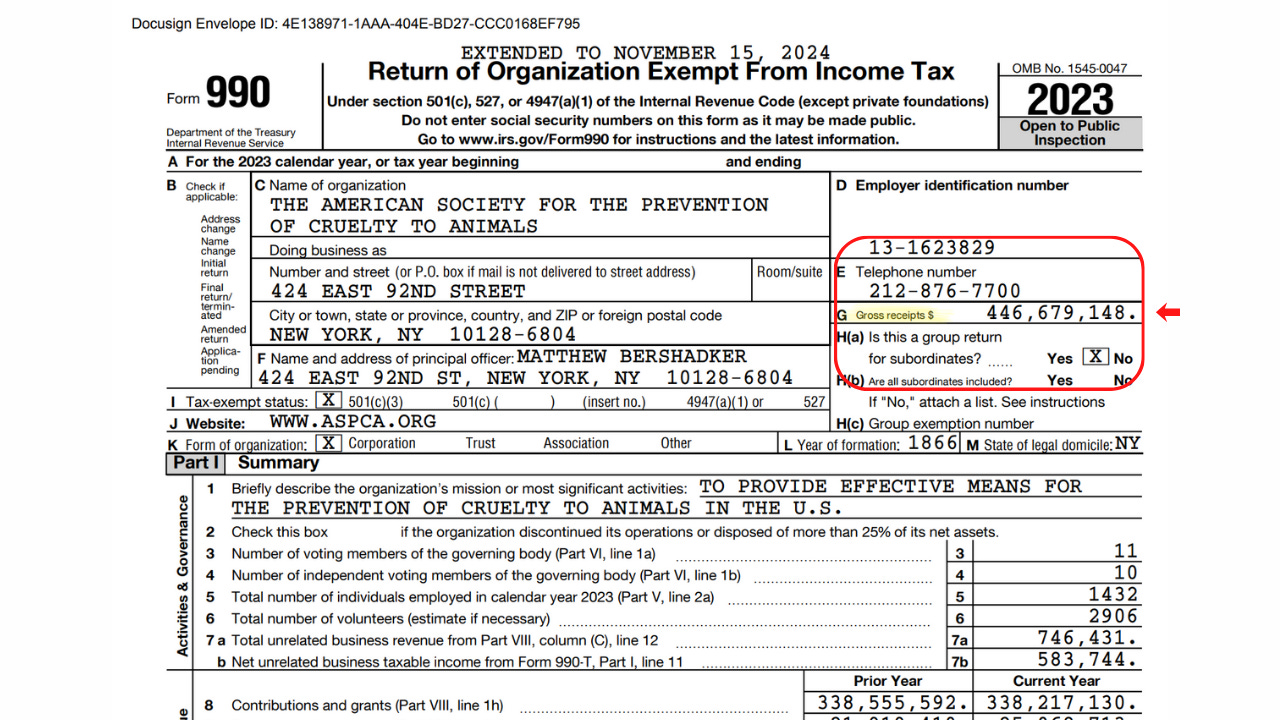
Every nonprofit has to file this document with the IRS. It’s public record.Look at the top of the first page.
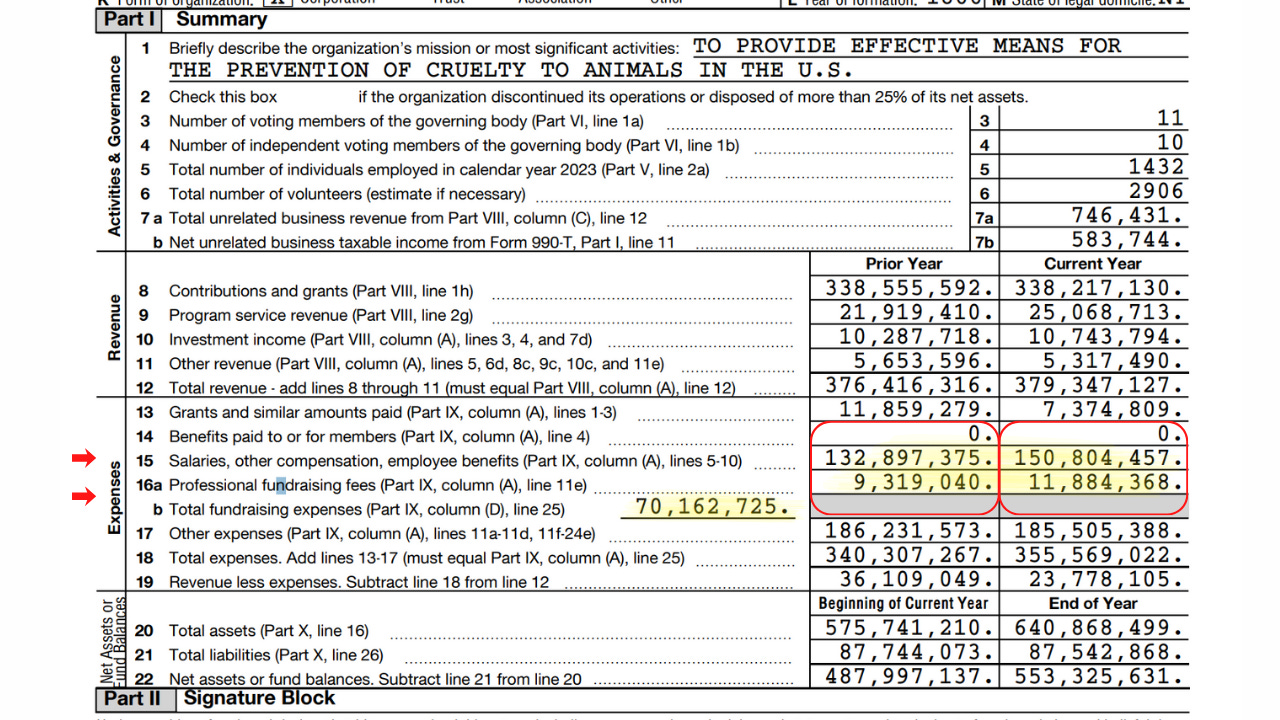
You’ll see their gross receipts — basically, how much money they brought in that year. Some of these numbers will knock your socks off. Here, you’ll see the ASPCA brought in nearly half a billion dollars in 2023.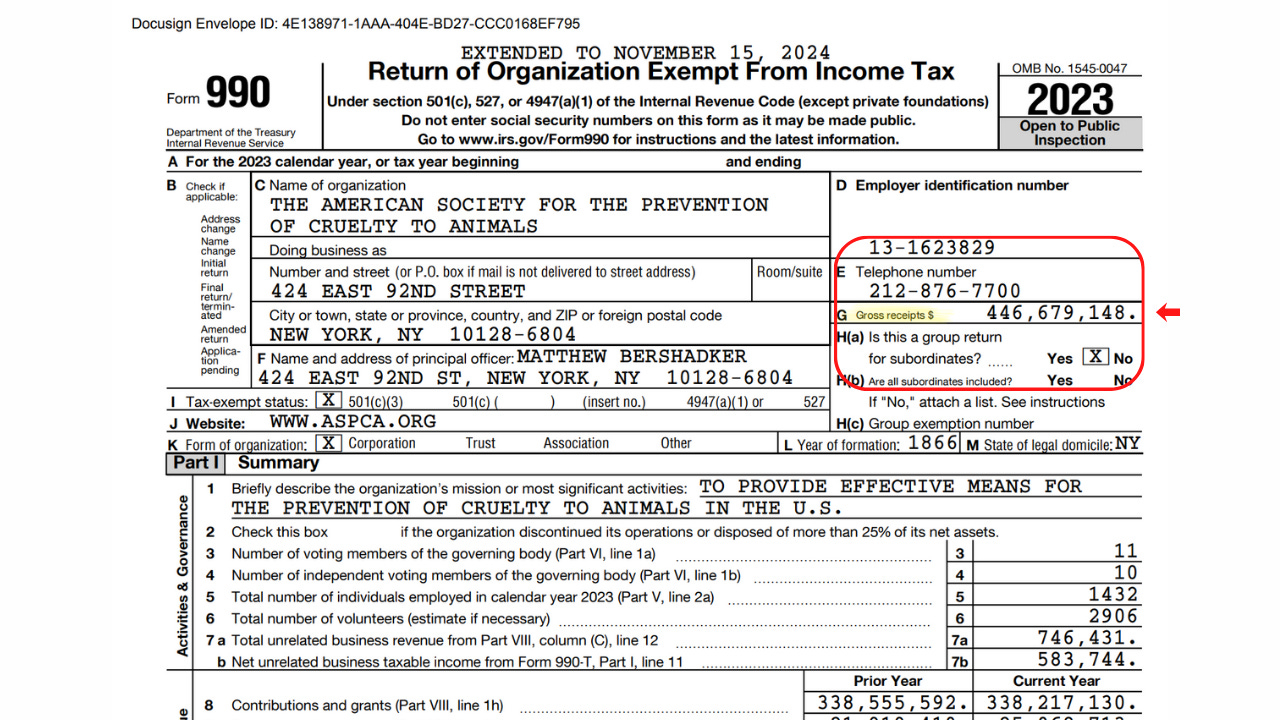
Then, take a look at how much of that money was actually spent on the programs you think or hope it did. Here, you’ll see that the grants paid out to help the animals amounted to $7,374,809 for 2023. I don’t even need a calcualtor for this — I can see that the ASPCA brought in nearly $500,000,000 (that’s 500 HUNDRED MILLION dollars) and just over 7 million dollars went to the animals. Hmmm…
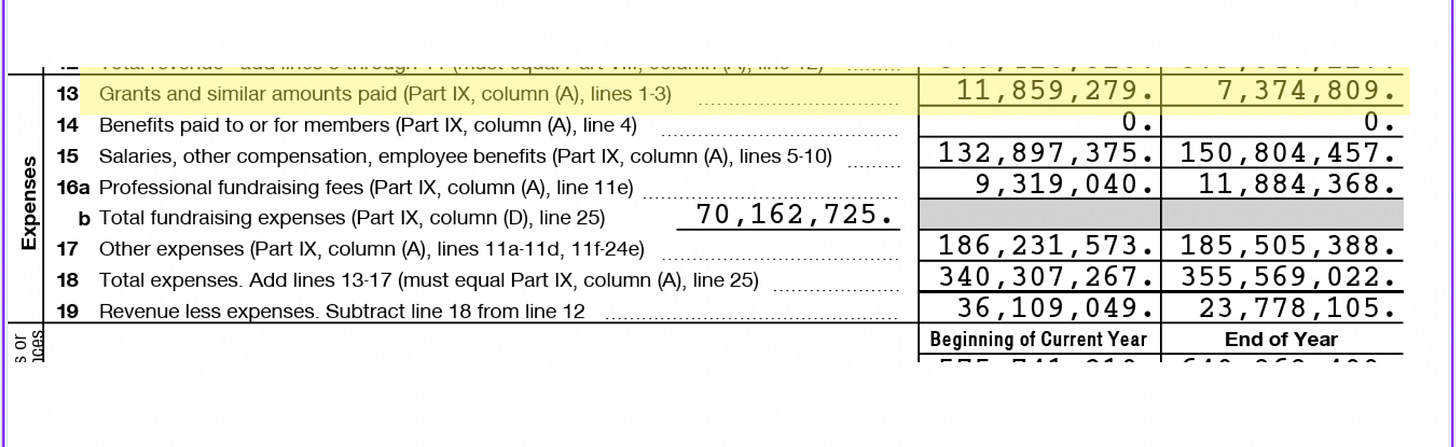
Scroll to “Salaries and Compensation.”
This is where you see how much the CEO and top officers make combined. In a moment, I’ll show you how to see who gets what.Check their spending on “Fundraising” and “Advertising.”
This tells you how much they spend asking for more money instead of actually helping people (or animals, or whoever they claim to help).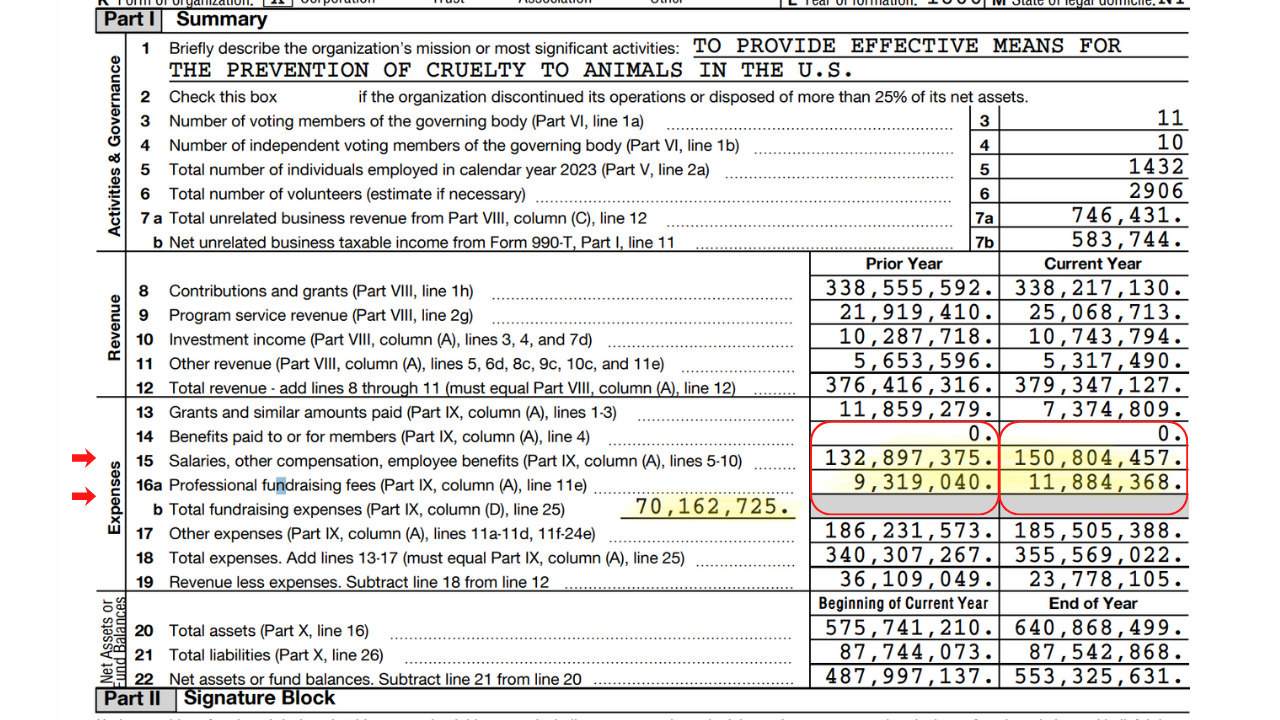
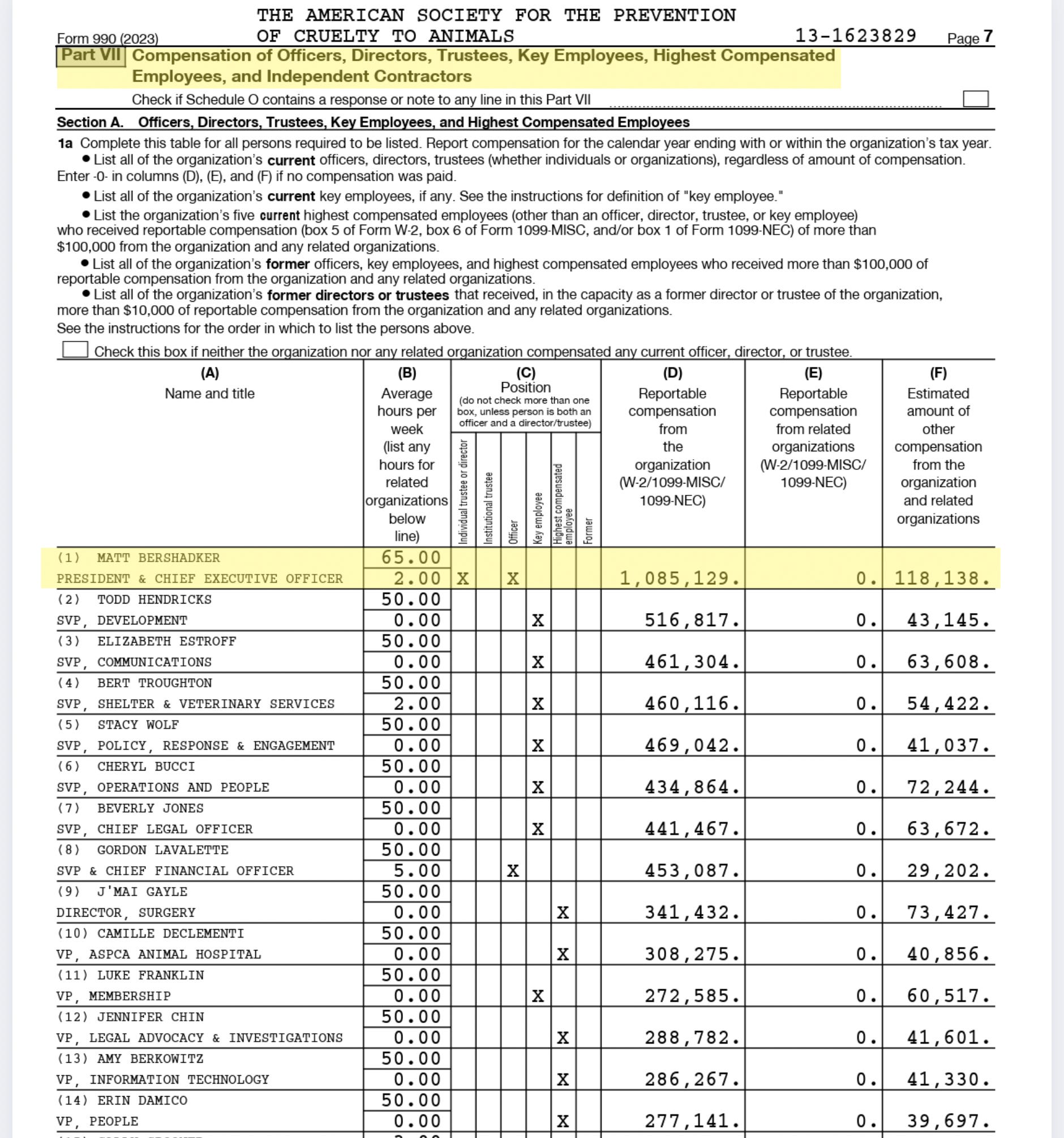
Then, keep going until you see Part IV “Compensation”. Take a look at how many dollars you’ve donated end up in the executive’s pockets. Yes, that is over a million dollars for the ASPCA president and CEO.
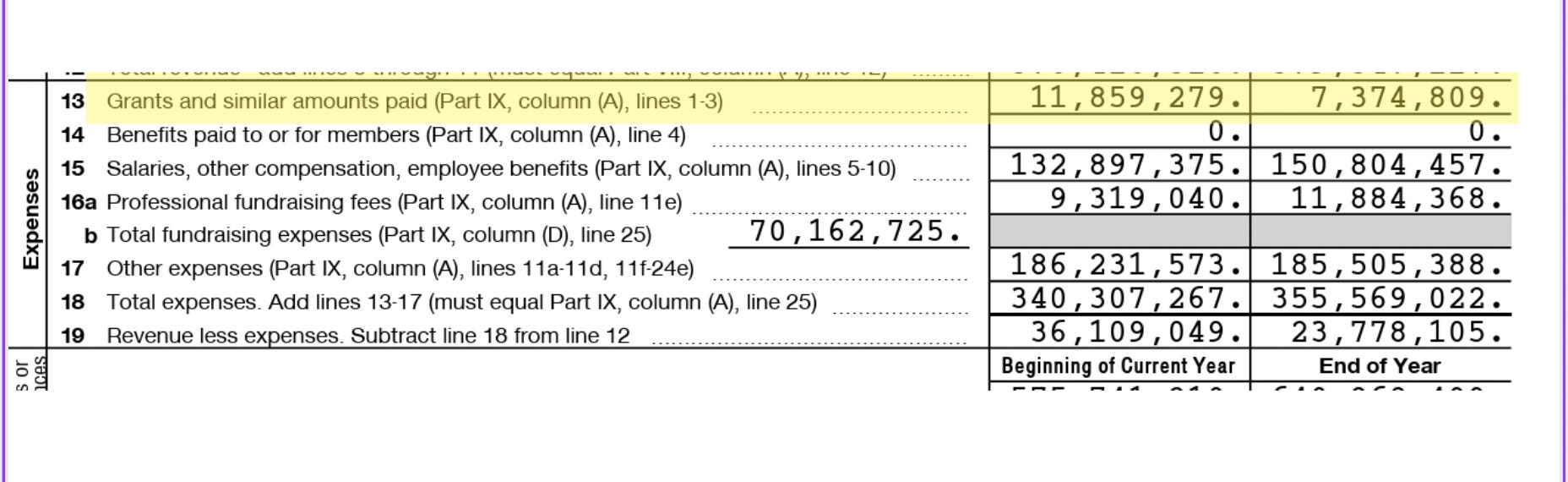
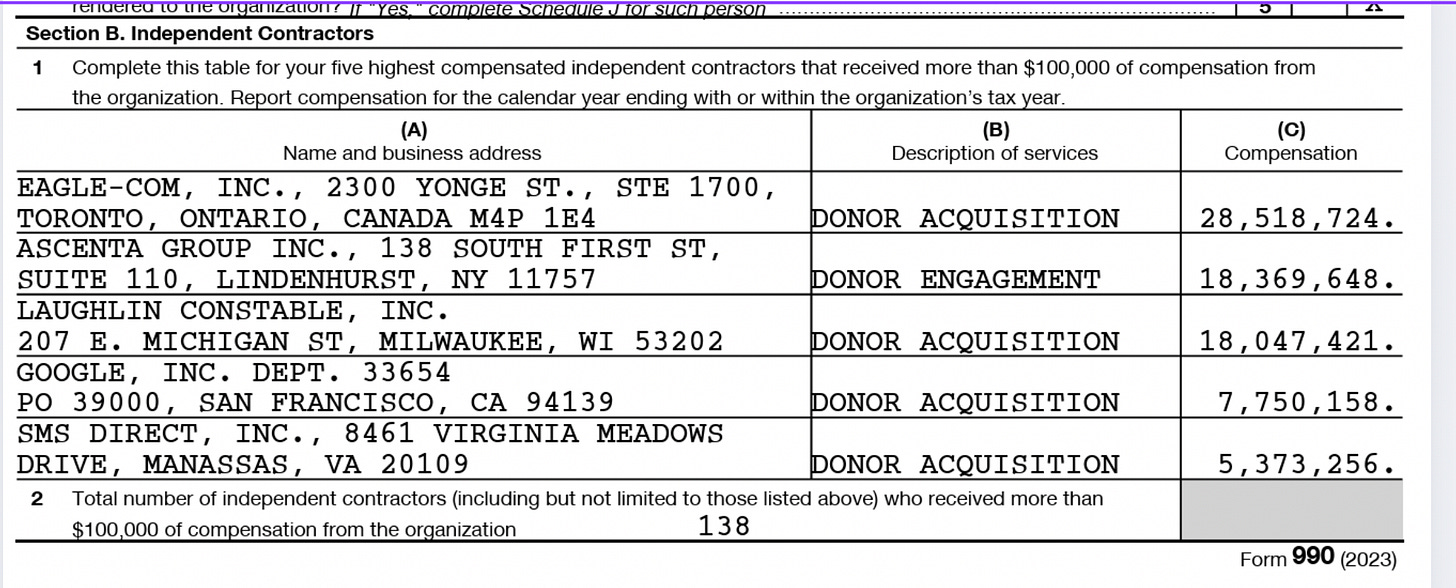
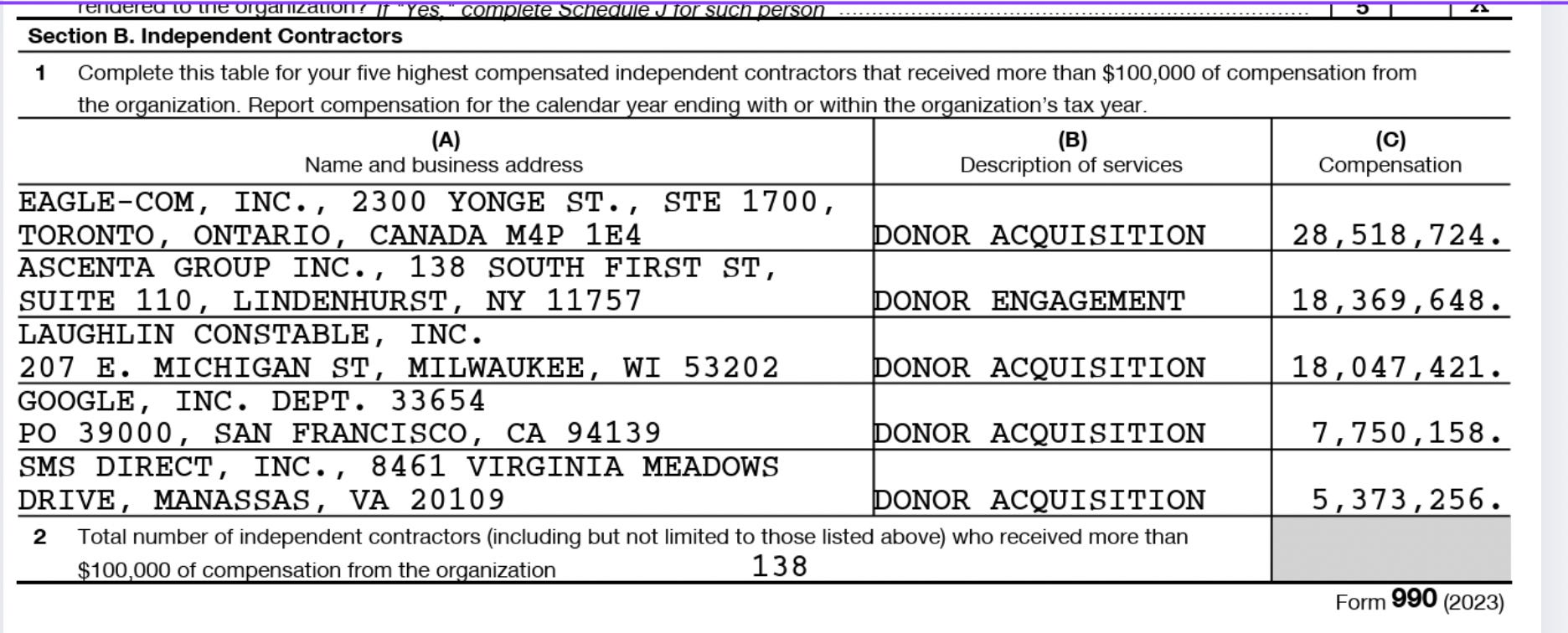
Next, under Part VII “B”, take a look at the contractors. Here, you can see that the ASPCA spent about $75 million to get more donors. (Remember those calendars I told you about? Some of those expenses would fall under this category.)
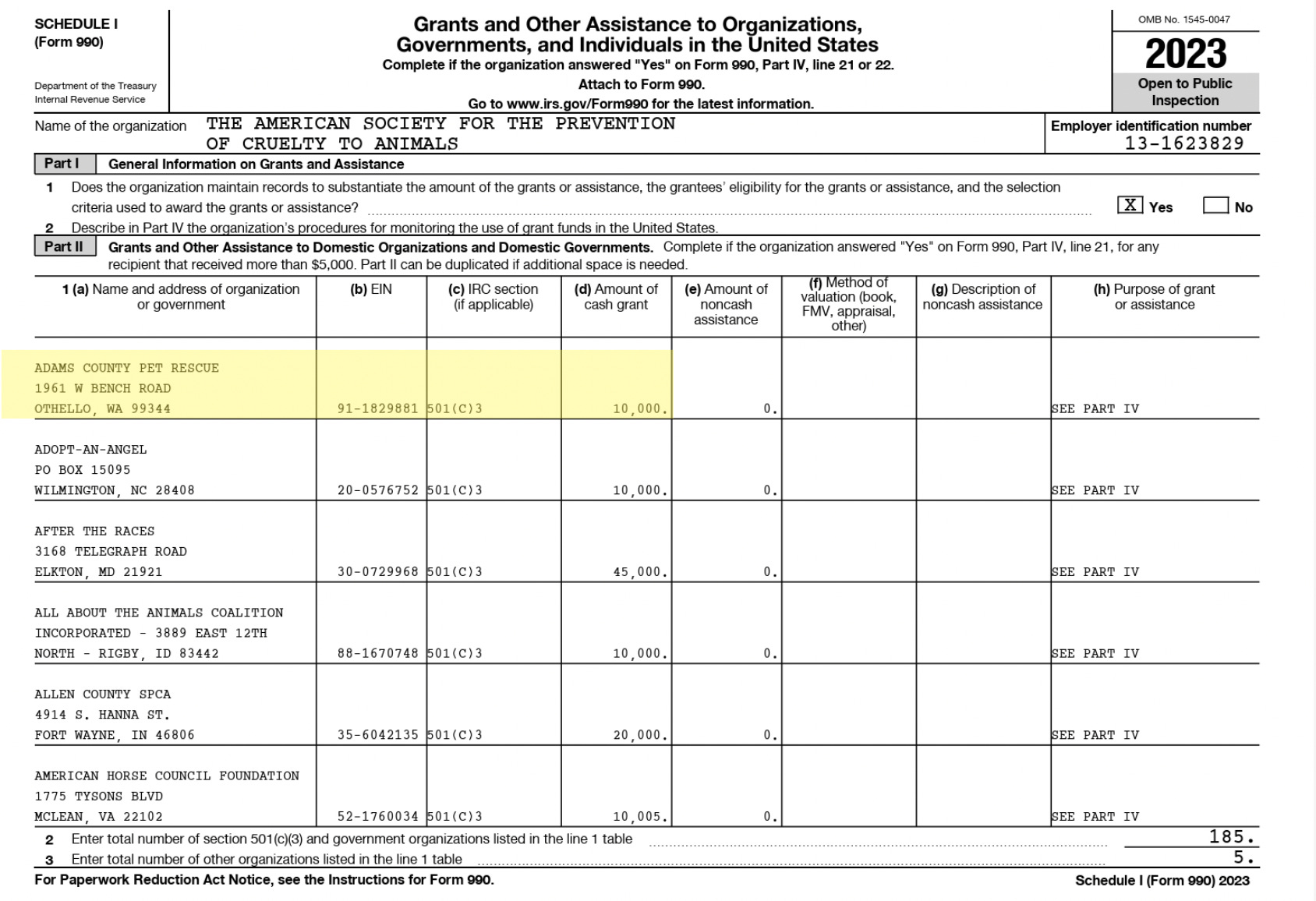
Next, you can scroll to Schedule I, where you’ll see where your donations went in terms of which rescue groups got how much money. There are several more entries than I’m showing you here, and the average grant looks to be about $10,000. That is ten thousand dollars. Looks like the ASPCA could bump that up to $100,000 per grantee and still have money left over if they budgeted correctly.
Once you get used to reading a Form 990, you’ll never look at a donation appeal the same way again.
ProPublica is also a solid website to investigate non-profits and browse their annual returns.
Watch my video here where I reveal the eyebrow-raising salaries of the Best Friends and the US Humane Society (now renamed Humane World for Animals).
I also share with you a couple of my own favorite animal charities, which I have listed for you below. They bring in far fewer dollars, take little if any salaries, and spend the money you donate directly on rescuing animals, not fancy calendars and refrigerator magnets.
Non-Profits I Support
There are real, honest, boots-on-the-ground organizations doing incredible work without the bloated overhead. These are the ones I personally support:
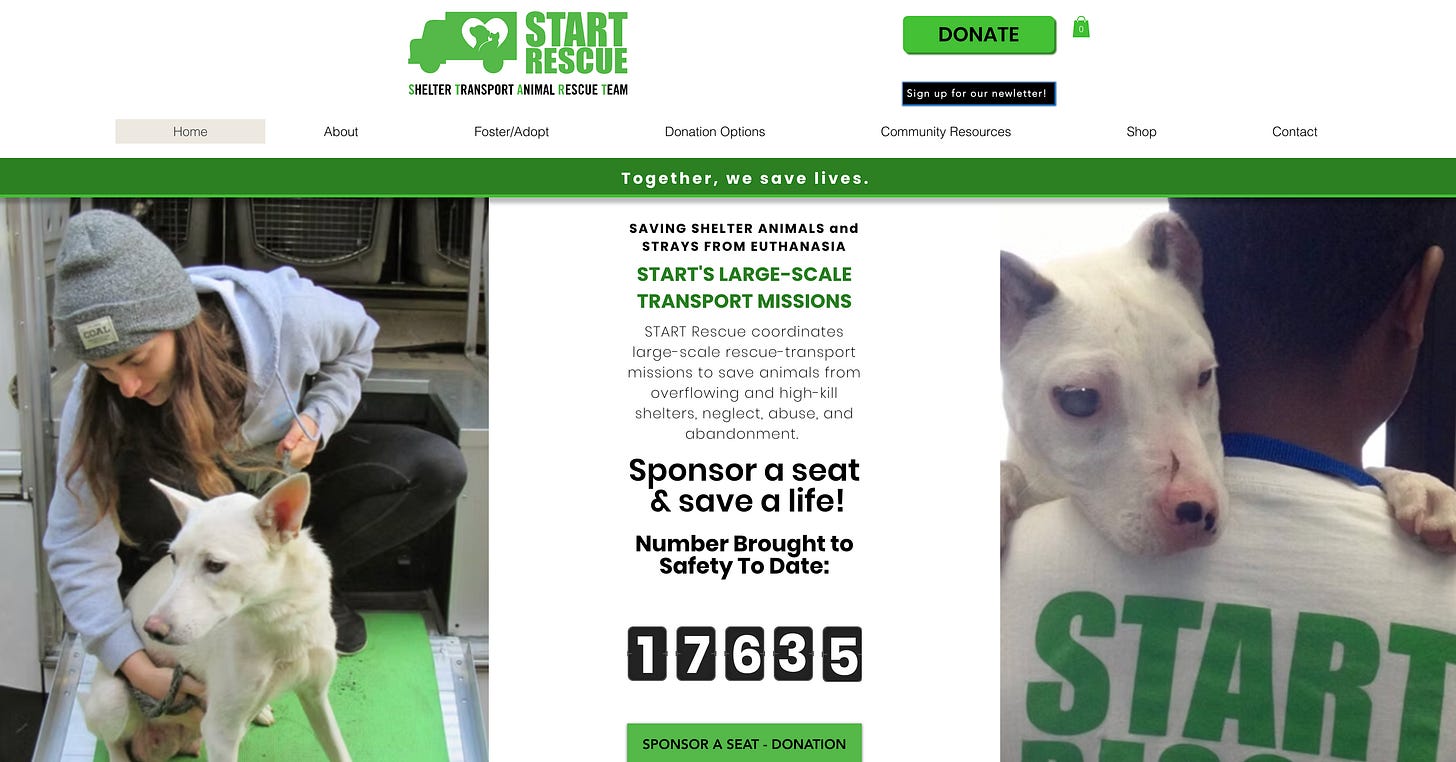
START Rescue (Shelter Transport Animal Rescue Team) — They rescue animals from California shelters where they’re at risk of euthanasia and transport them to safe havens in Oregon, Washington, and Idaho. The directors take no salary. They even earned GuideStar’s Platinum Seal of Transparency. Total income for 2023: $941,000. Executive compensation: 0.
Big Dog Ranch Rescue — The largest no-kill, cage-free animal sanctuary in the U.S. They run on a fraction of the budget of those massive “brands” and still manage to care for thousands of animals. Total income for 2023: $13.8 million. Executive compensation: 0

Their Lives Matter — A small, local grassroots group that brought in only $57,000 last year, spent $60,000 helping animals, and paid their entire staff… nothing. Because every penny went to the cause.

These are organizations that live their mission. The founders aren’t raking in six-figure salaries. I‘m not poo-pooing any of the other organizations. I don’t know those people. Maybe they’re doing great work. The point is: know where your money goes before you give.


Before signing off, here’s a summary of some of the bigger charities you might have supported, with data from the most recent Form 990s I could find:
Good will — $78,000,000 income; CEO earns $680,000
Salvation Army — $38,000,000 income CEO makes $170,000
Red Cross — $4,400,544,903 income (that is 4 BILLION, 400 MILLION, 544 THOUSAND…) Total salaries are $1.6 BILLION with the CEO making $1.3 MILLION
How do like them apples?
Whether your heart leans toward animal rescue, children’s charities, veterans’ groups, or disaster relief, the principle is the same: find out how the funds are spent, check how much goes to fundraising and executive pay, and make sure their actions still match their mission. I’m not here to tell you who deserves your donation. I’m here to help you dig deeper.



Thank you Peggy. I too have been very cautious about where I donate. I am getting really frustrated with the local animal shelter and their insistence on vaccinating the heck out of every animal that goes there as well as spaying and neutering the kittens and puppies at ridiculously young ages. I talked to the veterinarian at one of the shelters and she understood my point of view put felt like it was imperative the animals had all those procedures before being adopted out in case the person (s) adopting didn't follow through with doing it. 🤦🏽♀️
Curious how one gets around the dog/cat license requirement that usually demands proof of vaccination (usually rabies) same issue with boarding pets. Unfortunately, every pet I have adopted from a shelter was vaccinated and chipped.